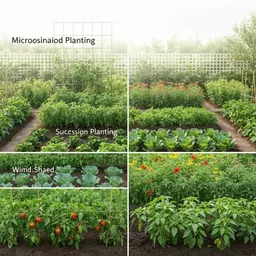
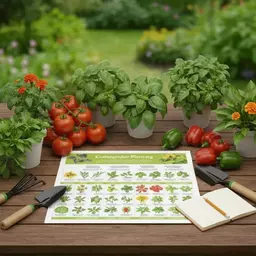
Microclimates: Your Garden's Hidden Zones
Small areas within your garden with distinct climatic conditions (sun, wind, moisture) influencing plant growth.

What if you could transform your garden into a thriving paradise simply by understanding the unique climate around you? Discover how microclimates and succession planting can unlock your garden's potential!
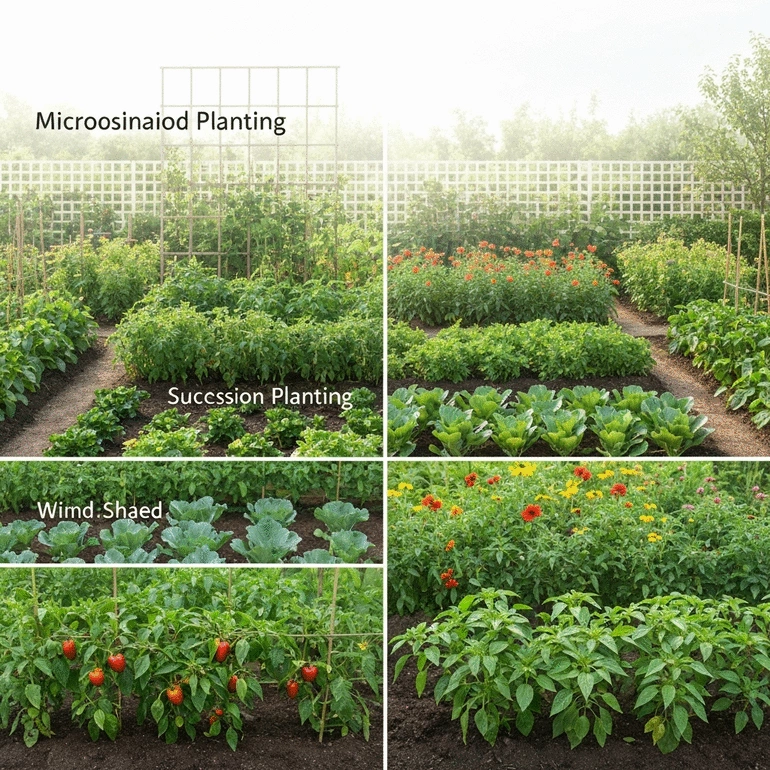
Here's a visual summary of how microclimates and succession planting work together to create a more productive garden, along with practical steps to get started.
Small areas within your garden with distinct climatic conditions (sun, wind, moisture) influencing plant growth.
Staggering plantings to ensure a steady supply of produce throughout the growing season.
Mapping microclimates to plant heat-loving crops in sunny spots and leafy greens in shade for max growth.
Assess sunlight & wind patterns.
Create a tailored planting calendar.
When it comes to maximizing your garden's potential, understanding microclimates and the concept of succession planting is key. These advanced techniques can significantly enhance your gardening experience, allowing you to cultivate a more bountiful and vibrant space year-round. Let's dive into what these terms mean and how they can benefit your garden!
A microclimate is a small area within your garden that has a different climate than the surrounding area. This can be due to factors like shade from trees, windbreaks from fences, or even the warmth from a stone wall. Understanding your garden's microclimates can help you select the right plants for each specific area. For instance, if you have a sunny spot that receives plenty of light, it’s perfect for heat-loving plants like tomatoes or peppers! Research published in PMC National Library of Medicine highlights the critical role of microclimates in agricultural planning, emphasizing how local atmospheric conditions significantly impact crop suitability and yield.
By observing your garden closely, you can identify these unique microclimates. This observation allows for thoughtful planning and helps you maximize your gardening efforts!
Succession planting is a technique used to ensure that you have a continuous supply of produce throughout the growing season. Instead of planting all your seeds at once, you can stagger plantings at intervals. This method not only maximizes space but also ensures that you’re enjoying fresh vegetables from your garden over a longer period. For example, you can plant a row of lettuce every two weeks to enjoy a steady harvest of crisp greens! For more detailed strategies on effective succession planting, consult resources like Denver Urban Gardens' guide on garden planning.
Incorporating succession planting into your gardening routine can transform your garden into a productive powerhouse. Not only do you get to enjoy a variety of crops throughout the year, but it also keeps your gardening tasks manageable and exciting!
Now that we've laid the groundwork for understanding microclimates and succession planting, let’s explore some strategies to incorporate these concepts effectively into your garden planning.
Maximize your garden’s potential by regularly observing your microclimates. Take notes on how sunlight, wind, and moisture levels vary at different times of the day and season. This data will help you make informed decisions on what to plant where, ultimately leading to a more fruitful and thriving garden!
To help you better understand and implement these advanced gardening techniques, here are some frequently asked questions:
As we wrap up our exploration of advanced garden planning, it’s essential to recognize the interconnectedness of microclimates and succession planting. By understanding your garden's unique microclimate zones, you can make informed decisions about what to plant and when. This strategy not only maximizes your growing season but also enhances the overall productivity of your garden.
Here are some key takeaways to remember:
These insights will empower you to take your gardening efforts to the next level. Remember, gardening is a journey, and every season brings new opportunities for growth and learning!
Integrating what you know about microclimates into your succession planting plan is a game changer! For instance, if you have a sunny microclimate spot, you can plant heat-loving crops like tomatoes or peppers there while utilizing shaded areas for leafy greens that thrive in cooler conditions. This approach not only maximizes your space but also enhances the overall health of your plants. This innovative approach to crop selection and placement, leveraging environmental variations, is supported by recent studies on plant resource allocation, as discussed in Frontiers in Plant Science.
By embracing this integrative approach, you'll be able to optimize your yields and enjoy a garden that's not just functional but flourishing! What microclimate strategies have worked for you in the past?
Now that you're equipped with knowledge about microclimates and succession planting, it’s time to take action! Here are some practical steps you can implement in your garden today:
These steps will guide you toward a more efficient gardening process and ultimately lead to a more bountiful harvest. Don’t hesitate to experiment and adjust your strategies as you learn what your garden thrives on!
Gardening is all about continuous learning! Just like any other skill, the more you practice and experiment, the more skilled you’ll become. I encourage you to keep a gardening journal where you can note your successes and challenges throughout the seasons.
Consider trying new techniques, like vertical gardening or incorporating companion planting, to see how they affect your yields. Each gardening season is a fresh opportunity to innovate and grow!
At Year-Round Gardening Insights, we believe in the power of community. Sharing your gardening experiences can provide valuable insights not just for you but for fellow gardeners as well. Whether it’s a successful planting method or a unique pest control strategy, your tips can inspire others!
Connecting with others will enrich your gardening journey and foster a sense of community. After all, we’re all in this together, and sharing knowledge is what makes gardening such a rewarding pursuit!
Community gardening is another fantastic way to learn and grow alongside fellow gardening enthusiasts. Joining a community garden can provide access to shared resources and knowledge that can significantly enhance your gardening experience. You can learn new techniques, gain access to tools, and even share the harvest!
In community gardens, we not only cultivate plants but also friendships and shared experiences. What have you learned from your community garden? Let’s keep the conversation going and continue to support one another in our gardening adventures!
Here is a quick recap of the important points discussed in the article: