What if I told you that the secret to a thriving garden lies in the company your plants keep? Companion planting is a powerful technique that not only enhances the beauty of your garden but also promotes a healthier ecosystem. Dive into this engaging method and discover how you can nurture your plants through strategic pairings.
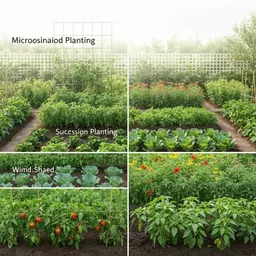
Companion planting is a harmonious gardening technique that leverages plant relationships to foster a healthier garden ecosystem. The visual below outlines its core benefits and a simple process to implement it effectively.
At Year-Round Gardening Insights, we believe that a vibrant garden is one that thrives through the harmony of its plant relationships. Companion planting is an exciting gardening technique that embraces this philosophy, allowing us to create healthier green spaces by strategically pairing plants. But what exactly is companion planting, and how can it benefit your garden?
In simple terms, companion planting involves growing different plants in close proximity for mutual benefit. These beneficial relationships can enhance growth, deter pests, and even improve the overall health of your garden. So, let's take a closer look at how this age-old practice works!
Companion planting is rooted in the idea that certain plants, when grown together, can support each other's growth and well-being. For instance, some plants can naturally repel pests, while others may improve soil nutrients or attract beneficial insects. This synergy helps create a more balanced ecosystem within your garden. For a comprehensive overview, the University of Arizona Cooperative Extension offers an excellent introduction to companion planting and its benefits.
By understanding these relationships, you can create a robust planting plan that maximizes your garden's potential. It’s like having a team of plant buddies working together for a common goal—healthy growth!
One of the most significant advantages of companion planting is its natural approach to pest control. By selecting the right plant combinations, you can effectively deter many garden pests without resorting to chemical sprays. This not only protects your plants but also supports the overall health of your garden ecosystem.
Incorporating these plants into your garden not only enhances its beauty but also promotes a healthier environment for your plants to thrive. It’s a win-win situation!
Companion planting goes beyond pest management; it plays a vital role in improving soil health and attracting pollinators. This holistic approach can elevate your gardening game and foster a thriving ecosystem.
By planting with intention, you create a garden that not only nourishes your plants but also invites essential wildlife, enhancing biodiversity and ensuring a robust gardening experience.
When we talk about beneficial insects, we're referring to the tiny heroes of our gardens. These insects, such as ladybugs and predatory wasps, play an essential role in pest management by preying on harmful pests. By incorporating plants that attract these allies, you can significantly reduce pest pressure in your garden. For more insights on combining plants for a healthy, well-balanced garden, the University of Illinois Extension provides valuable information on companion planting practices.
By fostering an environment that welcomes beneficial insects, you not only protect your plants but also create a thriving ecosystem that supports diverse plant life. Who knew gardening could be such a collaborative effort?
As with many gardening practices, companion planting comes with its fair share of myths and misconceptions. It’s essential to debunk these to fully appreciate the potential of this technique and avoid any gardening pitfalls.
Understanding the realities of companion planting allows us to make informed decisions and cultivate our gardens with expertise. So, let’s clear the air and embrace the true potential of this beneficial method!
To maximize the benefits of companion planting, consider incorporating a variety of plants that bloom at different times throughout the season. This ensures continuous pollinator attraction and enhances cross-pollination, ultimately resulting in a more fruitful and resilient garden!
Companion planting is a gardening technique where different plants are grown in close proximity to provide mutual benefits, such as enhanced growth, pest deterrence, and improved soil health.
Certain plants naturally repel pests (e.g., marigolds deter nematodes) or attract beneficial insects (e.g., ladybugs eat aphids), reducing the need for chemical interventions.
Yes, deep-rooted plants can aerate the soil and improve drainage, while nitrogen-fixing plants like clover enrich the soil, making it more fertile for neighboring plants.
Beneficial insects like ladybugs, hoverflies, and parasitic wasps help control pest populations naturally by preying on harmful pests, contributing to a balanced garden ecosystem.
Yes, common myths include believing all plants can be paired without consequences, that it’s a one-size-fits-all solution, or that results are immediate and guaranteed. Understanding these helps in making informed decisions.
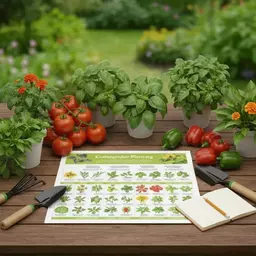
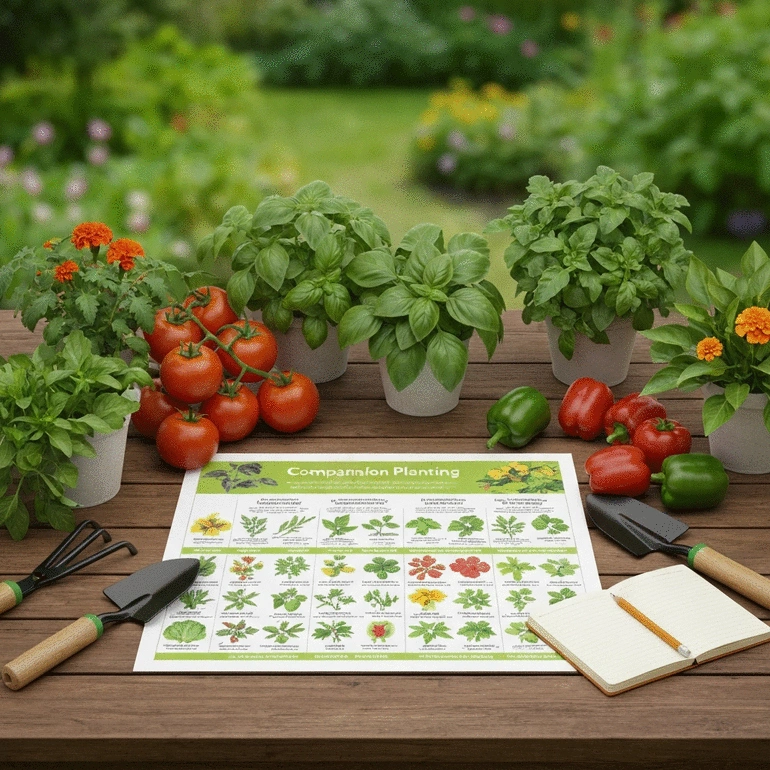
Now that you have a grasp on the principles of companion planting, it’s time to put that knowledge into action! One of the first steps you can take is to download your very own Companion Planting Chart. This handy tool will guide you in selecting the right plants to pair together, ensuring your garden flourishes while keeping those pesky pests at bay! For practical guidance on creating sustainable gardens through companion planting, Utah State University Extension offers valuable resources on sustainable school and home gardens.
By having a visual reference, you can easily navigate which plants work well together and which ones to avoid. You can find a variety of charts available for free online, or you can create your own personalized version to fit your unique garden needs. It’s all about making gardening accessible and enjoyable, just like I aim to do here at Year-Round Gardening Insights.
Ready to get started? Here are some simple steps to help you download and utilize your companion planting chart effectively:
Utilizing a companion planting chart helps streamline your gardening process, allowing you to focus on nurturing your plants rather than worrying about pests. Plus, it can be a fun project to tackle with family or friends!
As you embark on your companion planting journey, I encourage you to join our vibrant community of home gardeners! Sharing your experiences—successes and challenges alike—can deepen our collective understanding of what works best in our gardens. Have you noticed any surprising plant pairings? Or perhaps a companion strategy that’s worked wonders for you? Let’s connect and share those insights!
You can easily share your thoughts in the comments section of our blog or even tag us on social media. Building a network of fellow gardeners not only inspires innovation but also fosters a sense of camaraderie as we all strive for thriving, pest-free gardens together!
In wrapping up our exploration of companion planting, it's essential to recognize the incredible value of biodiversity in our gardens. By incorporating a variety of plants, you not only create a more visually appealing landscape but also naturally enhance the resilience of your garden ecosystem. Diverse plantings can lead to healthier soil, increased pest control, and improved pollinator support.
Remember, the key is to foster a balance in your garden. When we embrace biodiversity, we create a sanctuary for beneficial insects and enhance the overall health of our growing spaces.
Companion planting isn’t just about keeping pests at bay; it's also about cultivating sustainable gardening practices. By choosing plants that support each other, we can reduce the need for chemical pesticides and fertilizers, promoting a healthier environment for our families and communities.
As you plan your garden, consider how you can incorporate these sustainable practices into your routine. Whether it’s through mindful planting or sharing knowledge with fellow gardeners, remember that every small effort counts! Together, we can nurture our green spaces while fostering a greater appreciation for the natural world around us.
Here is a quick recap of the important points discussed in the article: